Saturday, March 31, 2012

Cash & Drugs


The basic drug deal on the street requires the surreptitious and rapid exchange of a quantity of defined wealth for a product of uncertain value. It is the addict who takes most of the risk in not knowing what he is buying; the drug pusher accepts only cash. Although he has some incentive to provide a decent product in order to keep customers loyal and to prevent the armed thugs among them from registering complaints with a bullet or a blade. An occasional sexual favor or a contraband item might be used, but the criminal enterprise requires fungible and ANONYMOUS assets in order to survive. What other choice does the drug dealer really have? How can he assess the value of some shiny metal or sparkling rocks efficiently enough to know their worth? Even if he knows that the Rolex is genuine, what can he do with it? How many such items can he negotiate in a night? How many smartphones and iPads can a pusher carry away to his hideout? How will he deposit these into a bank account or get them in to Mexico, Columbia, or Afghanistan?

The present scheme takes stolen merchandise to pawnshops where the thieves receive cash for a small fraction of the item's worth. If there is no cash in circulation, what can the thief be given--a check, a gift card, a bitcoin? What drug dealer will accept these? While an addict might start out with a job, some assets, and a family, he will rapidly exhaust these and the good will of friends and relatives as he invariably sinks deeper into his addiction. So, he must commit crime to feed his habit. It is estimated that 70-85% of all property crime is drug driven. That is, people commit these crimes in order to get money for drugs. It would be interesting to see an analysis as to how much of the drug money comes from crime and how much comes from the squandering of assets by their rightful owners. But my interviews with DEA agents, FBI profilers, prosecutors, drug addicts, and former drug dealers disclose a unanimous opinion that there is no substitute for cash in a drug deal. Charlie Sheen and Robert Downey, Jr. likely never once paid for their drugs with anything other than cash. But they illustrate the pattern of wasted talent and squandered wealth in order to pursue their addictions. The tragic list is long: Whitney Houston, John Belushi, River Phoenix, et al. No one ever seems to ask the question, "Who sold them their drugs?" If there were a credit card receipt or cancelled check, the answer would be obvious. Would it not?

But it should also be obvious that bartering could not sustain any large and complex enterprise--criminal or otherwise. That is, after all, why money was invented in the first place. Drug enterprises have to establish a production, distribution, and collection system with security and political corruption needs. Without cash, these interdependent functions become completely unworkable. The provenance of stolen merchandise is always a problem in cashing them in. And they have to be CASHED in! There is no other currency that can work for this process. It is impossible to launder cash if there is no cash being circulated. There is no point of anonymous wealth with which to abscond.

If some other form of money were workable for drug traffickers, why is it not now being using by them? The evidence is clear that they are not using alternatives. None exist. Bitcoins are not truly anonymous (Wikipedia), do not exist in quantities even remotely sufficient for the drug trade, do not have reliable value, and require Internet access that addicts do not possess. Digital wallets are not anonymous. As long as society does not want perverts purchasing child pornography or felons purchasing guns, the political will to make it otherwise will not be summoned. Further, the tax man does not allow you to give money even to your own children. The smuggling and laundering of cash remain more of a problem for drug lords than supplying drugs around the world. But without cash, they have no business at all.

https://www.google.com/search?q=drug+cash+photos&ie=utf-8&oe=utf-8&aq=t&rls=org.mozilla:en-US:official&client=firefox-a

The U.N. estimates that the world drug market exceeds $400 billion annually. To run this on bartering technology would require an enormous cataloging, warehousing, distribution, repair, and marketing infrastructure which could never withstand even cursory scrutiny from law enforcement. How do you pay your employees and suppliers? Are you going to give poppy growers in Afghanistan plasma TV sets? And when even one item is discovered to be illegitimate, the entire scheme can be exposed to every corner of the world and to every criminal involved when there is no cash with which to conceal their identities.

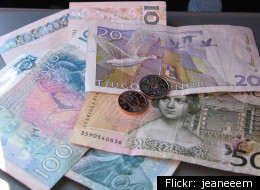
Sweden is already discovering a reduction of political corruption and other crime as it becomes cashless.

http://www.huffingtonpost.ca/2012/03/17/sweden-cashless-money-paper-coin_n_1355255.html

Thursday, March 29, 2012

The US government's war on cash

By repeatedly refusing to print money in larger bills, the Feds make it harder to make huge financial transactions and can more easily monitor the financial maneuverings of citizens.

By , Guest blogger / March 29, 2012

A worker counts U.S. dollar bills at a money changer in Manila in this file photo. Salerno argues that by rendering papoer currency useless for large financial transactions, the government gains more control over our money than it should have.

Under cover of its multiplicity of fabricated wars on drugs, terror, tax evasion, and organized crime, the US government has long been waging a hidden war on cash. One symptom of the war is that the largest denomination of US currency is the $100 note, whose ever-eroding purchasing power is far below the purchasing power of the €500 note. US currency used to be issued in denominations running up to $10,000 (including also $500; $1,000; $5,000 notes). There was even a $100,000 note issued for transactions among Federal Reserve banks. The United States stopped printing large denomination notes in 1945 and officially discontinued their issuance in 1969, when the Fed began removing them from circulation. Since then the largest currency note available to the general public has a face value of $100. But since 1969, the inflationary monetary policy of the Fed has caused the US dollar to depreciate by over 80 percent, so that a $100 note in 2010 possessed a purchasing power of only $16.83 in 1969 dollars. That is less purchasing power than a $20 bill in 1969!

Despite this enormous depreciation, the Federal Reserve has steadfastly refused to issue notes of larger denomination. This has made large cash transactions extremely inconvenient and has forced the American public to make much greater use than is optimal of electronic-payment methods. Of course, this is precisely the intent of the US government. The purpose of its ongoing breach of long-established laws regarding financial privacy is to make it easier to monitor the economic affairs and abrogate the financial privacy of its citizens, ostensibly to secure their safety from Colombian drug lords, Al Qaeda operatives, and tax cheats and other nefarious white-collar criminals

Now the war on cash has begun to spread to other countries. (Click here to read the whole article.) As reported a few months ago, Italy lowered the legal maximum on cash transactions from €2,500 to €1,000. The Italian government would have preferred to set a €500 or even €300 maximum limit but reasoned that it should permit Italians time to adjust to the new limit. The rationale for this limit on the size of cash transactions is the fact that the profligate Italian government is trying to reduce its €1.9 trillion debt and views its anticash measures as a means of cracking down on tax evasion, which “costs” the government an estimated €150 billion annually.

The profligacy of the Italian ruling class is in sharp contrast to ordinary Italians who are the least indebted consumers in the eurozone and among its biggest savers. They use their credit cards very infrequently compared to citizens of other eurozone nations. So deeply ingrained is cash in the Italian culture that over 7.5 million Italians do not even have checking accounts. Now most of these “bankless” Italians will be dragooned into the banking system so that the notoriously corrupt Italian government can more easily spy on them and invade their financial privacy. Of course Italian banks, which charge 2 percent on credit-card transactions and assess fees on current accounts, stand to earn an enormous windfall from this law. As controversial former prime minister Berlusconi noted, “There’s a real danger of crossing over into a fiscal police state.” Indeed, one only need look at the United States today to see what lies in store for Italian citizens.

Meanwhile the war on cash in Sweden is accelerating, although the involvement of the state is less overt. In Swedish cities, cash is no longer acceptable on public buses; tickets must be purchased in advance or via a cell-phone text message. Many small businesses refuse cash, and some bank facilities have completely stopped handling cash. Indeed in some Swedish towns it is no longer possible to use cash in a bank at all. Even churches have begun to facilitate electronic donations from their congregations by installing electronic card readers. Cash transactions represent only 3 percent of the Swedish economy, while they account for 9 percent of the eurozone and 7 percent of the US economies.

A leading proponent of the anticash movement is none other than Bjorn Ulvaeus, former member of the pop group ABBA. The dotty pop star, whose son has been robbed three times, believes that a cashless world means greater security for the public! Others, more perceptive than Ulvaeus, point to another alleged advantage of electronic transactions: they leave a digital trail that can be readily followed by the state. Thus, unlike countries with a strong “cash culture” like Greece and Italy, Sweden has a much lower incidence of graft. As one “expert” on underground economies instructs us, “If people use more cards, they are less involved in shadowy economy activities,” in other words, secreting their hard-earned income in places where it cannot be plundered by the state.

The deputy governor of the Swedish central bank, Lars Nyberg, gloated before his retirement last year that cash will survive “like the crocodile, even though it may be forced to see its habitat gradually cut back.” But not everyone in Sweden is celebrating the dethronement of cash. The chairman of Sweden’s National Pensioners’ Organization argues that elderly people in rural areas either do not have credit or debit cards or do not know how to use them to withdraw cash. Oscar Swartz, the founder of Sweden’s first Internet provider, a supporter of the phasing out of cash, argues that without the adoption of anonymous payment methods, people who send money and make donations to various organizations can be “traced every time.” But, of course, what the artless Mr. Swartz does not see is that this is the whole point of a cashless economy — to make even the most intimate economic affairs of private citizens transparent to the state and its fiscal and monetary apparatchiks, who themselves hate and fear transparency like vampires do sunlight. And then there are the benefits that accrue to the government-privileged banking system from the demise of cash. One Swedish small businessman shrewdly noted the connection. While he gets charged 5 kronor (80¢) for every credit-card transaction, he is prevented by law from passing this on to his customers. In his words, “For them (the banks), this is a very good way to earn a lot of money, that’s what it’s all about. They make huge profits.”

Wednesday, March 28, 2012

Greece's Shadow Economy

Greece's shadow economy raises fresh fears

In this world, nothing is certain apart from death and taxes – unless, that is, you live in Greece.

In this world, nothing is certain apart from death and taxes – unless, that is, you live in Greece.
The Organisation for Economic Co-operation and Development said that of the €33bn (£29bn) owed in hard-to-collect tax arrears to the Greek government in 2009, only €8bn was deemed recoverable. Photo: EPA

In a country where tax evasion is a way of life, many consider themselves outside the law when it comes to paying.

Figures compiled for The Sunday Telegraph by the world renowned expert Prof Friedrich Schneider of Linz University in Austria show that Greece's shadow economy – made up of the trade, goods and services, both legal and illegal where taxes are not paid – grew from 24.3pc of GDP in 2008 to 25.4pc in 2010.

This compares with 10.7pc of GDP in the UK, 13.9pc in Germany, 19.4pc in Spain and 21.8pc in Italy.

With around half of the country's austerity measures reliant on tax and revenue increases, and a quarter of Greece's economy out of control, many question whether Greece's government will be able to keep its deficit-cutting promises in a country that is already struggling to stay afloat.

The Organisation for Economic Co-operation and Development said that of the €33bn (£29bn) owed in hard-to-collect tax arrears to the Greek government in 2009, only €8bn was deemed recoverable.

An inefficient legal system means that even when the law does catch up, it can take between seven and 10 years to reach a definitive verdict, hampering the government's ability to deal with cases quickly and effectively.

Sources within the Greek government's recently revamped SDOE financial crime unit say the problem stems from a lack of forologiki sinidisi or "tax conscience" which stems from an age-old distrust of the government.

Tax officials are hated, and many Greeks believe the taxes they collect will simply be pilfered or wasted on failed government endeavours.

"The size of the shadow economy depends on what Greek citizens get back from the state," says Prof Schneider.

"If you go to the hospital because your child has a bloody knee and the physician says you need to pay me a €200 bribe or I won't even look at your child, then people will think why should I have to pay taxes when I have to pay these extras anyway?"

Michael Massourakis, chief economist at Alpha Bank in Greece, says it is important to distinguish between the small traders "eating from their own flesh" and the "fat cat" evaders who believe they are above the law.

He says the luxury levies in Greece's austerity package are just "window dressing measures" that will do little to address the unfairness of a system that punishes honest taxpayers.

Others have already moved on from the question of policy and on to one of default.

"Greece's deficit targets have been so badly missed that they won't get past March," says Andrew Lilico, director of Europe Economics.

"Its options are simple – default now or default after it's got a bit more money from the IMF and Europeans."

With its economy predicted to shrink 5.3pc this year, from the 3.75pc forecast just three months ago, Prof Schneider says that the recession in Greece will now be so deep that even the shadow economy will shrink to 24.3pc of GDP in 2011.

"People have so little money that this even reduces the demand for shadow economy activities," he says.

Whether or not Greece defaults, many economists agree that it will need to take charge of its problems through structural reforms.

"There isn't any magic bullet that ends tax evasion," says Mr Lilico. "You have to try and shift the social equilibrium, establish to people the idea that you're going to require taxes of them and reward the law abiding. Once you do that, you will find that compliance becomes much more automatic to people."

This idea of teaching people to pay taxes has already been played out in Italy, which passed a new €54bn (£47.1bn) package of austerity measures on Wednesday.

The Italian government recently turned to advertising agency Saatchi & Saatchi to create two adverts aimed at tackling tax evasion.

In the first, evaders are portrayed as “parasites of society” while the second tells viewers, “If everyone pays their tax, tax repays everyone”.

It’s a simple message, but one that falls on deaf ears in a country where asking for a receipt can end up adding an extra €20 to your bill.

Maurizio Bovi, chief economist at the Institute for Studies and Economic Analyses in Italy, sums it up.

“The classic question among the self-employed has always been: 'The bill is €100 without a receipt or €120 with’. With VAT now raised from 20pc to 21pc in the austerity package, the only difference now is you have to pay €121.”

Mr Bovi agrees that “one shot policies” such as tax amnesties are not the solution to breaking the cycle of tax evasion - often doing more harm than good.

“Politicians are myopic. They just want to have some cash to pay back the debt, especially for the short term so they can gain political advantage.”

He adds that Italy’s problems are structural and cannot be solved overnight.

“Clearly it’s much easier to say what not to do, but one measure could be to use the extra revenue from tax evasion to lower tax rates and give people an incentive not to evade.”

“Tax evasion is a structural issue, so in the short term it’s almost impossible to achieve any gains. But clearly if you do not start – you do not arrive.”

Cashless Society Inevitable

Cashless society close to reality

Katie Keir / March 16, 2012

Two thirds of men (66%) are more inclined to carry large amounts of cash, as opposed to the vast majority of women (76%) who consistently carry $50 or less, according to a recent joint poll conducted by RBC and Shoppers Drug Mart.

Men who always keep cash in their wallets tend to use a bank machine up to twice a week (41%), compared to only one third of women. The poll also found that 28% of women rarely or never withdraw cash, compared to 22% of men.

“Canadians prefer to have some cash on hand, but our survey suggests that women in particular are finding debit to be a more convenient way to pay for their day-to-day purchases,” said Wayne Bossert, executive vice-president of Canadian banking at RBC.

The survey revealed that on average, over half of women (51%), as opposed to only 40% of men, use debit to purchase everyday items such as groceries, coffee and household items.

“We are increasingly becoming a cashless society and Canadians are adopting options such as debit, [especially] now that they can earn rewards points on debit purchases that translate into savings,” Bossert adds.

As it turns out, RBC and Shoppers are not the only organizations that have noted this trend—The Royal Canadian Mint has been actively monitoring the increasing growth of electronic payments.

In addition, they have noted the growing popularity of micro and nano-transactions and the explosion of mobile commerce, which suggests there are new opportunities for innovative currency options.

In response to these trends and to consumers’ preference for going cashless, the Mint has now developed a new beta product called MintChip. Designed as the evolution of currency, MintChip could become a digital replacement for the pocketful of the coins no one ever uses, and may eliminate the need for carrying cash altogether.

The Royal Canadian Mint will shortly execute a competition among North American software developers to vet the technology and challenge developers to identify innovative ways to use and integrate the MintChip proposition.

The mint’s CEO, Marc BrulĂ©, will be unveiling the new technology and giving a keynote address on April 17th at The Canadian Institute’s Forum on Canadian Payment Innovations, a strategic business conference involving key stakeholders in Canada’s payments ecosystem.

In Sweden, Cash Is King No More

By MALIN RISING 03/17/12 04:25 AM ET AP


Sweden Cash

STOCKHOLM -- Sweden was the first European country to introduce bank notes in 1661. Now it's come farther than most on the path toward getting rid of them.

"I can't see why we should be printing bank notes at all anymore," says Bjoern Ulvaeus, former member of 1970's pop group ABBA, and a vocal proponent for a world without cash.

The contours of such a society are starting to take shape in this high-tech nation, frustrating those who prefer coins and bills over digital money.

In most Swedish cities, public buses don't accept cash; tickets are prepaid or purchased with a cell phone text message. A small but growing number of businesses only take cards, and some bank offices – which make money on electronic transactions – have stopped handling cash altogether.

"There are towns where it isn't at all possible anymore to enter a bank and use cash," complains Curt Persson, chairman of Sweden's National Pensioners' Organization.

He says that's a problem for elderly people in rural areas who don't have credit cards or don't know how to use them to withdraw cash.

The decline of cash is noticeable even in houses of worship, like the Carl Gustaf Church in Karlshamn, southern Sweden, where Vicar Johan Tyrberg recently installed a card reader to make it easier for worshippers to make offerings.

"People came up to me several times and said they didn't have cash but would still like to donate money," Tyrberg says.

Bills and coins represent only 3 percent of Sweden's economy, compared to an average of 9 percent in the eurozone and 7 percent in the U.S., according to the Bank for International Settlements, an umbrella organization for the world's central banks.

Three percent is still too much if you ask Ulvaeus. A cashless society may seem like an odd cause for someone who made a fortune on "Money, Money, Money" and other ABBA hits, but for Ulvaeus it's a matter of security.

After his son was robbed for the third time he started advocating a faster transition to a fully digital economy, if only to make life harder for thieves.

"If there were no cash, what would they do?" says Ulvaeus, 66.

The Swedish Bankers' Association says the shrinkage of the cash economy is already making an impact in crime statistics.

The number of bank robberies in Sweden plunged from 110 in 2008 to 16 in 2011 – the lowest level since it started keeping records 30 years ago. It says robberies of security transports are also down.

"Less cash in circulation makes things safer, both for the staff that handle cash, but also of course for the public," says Par Karlsson, a security expert at the organization.

The prevalence of electronic transactions – and the digital trail they generate – also helps explain why Sweden has less of a problem with graft than countries with a stronger cash culture, such as Italy or Greece, says economics professor Friedrich Schneider of the Johannes Kepler University in Austria.

"If people use more cards, they are less involved in shadow economy activities," says Schneider, an expert on underground economies.

In Italy – where cash has been a common means of avoiding value-added tax and hiding profits from the taxman – Prime Minister Mario Monti in December put forward measures to limit cash transactions to payments under (EURO)1,000 ($1,300), down from (EURO)2,500 before.

The flip side is the risk of cybercrimes. According to the Swedish National Council for Crime Prevention the number of computerized fraud cases, including skimming, surged to nearly 20,000 in 2011 from 3,304 in 2000.

Oscar Swartz, the founder of Sweden's first Internet provider, Banhof, says a digital economy also raises privacy issues because of the electronic trail of transactions. He supports the idea of phasing out cash, but says other anonymous payment methods need to be introduced instead.

"One should be able to send money and donate money to different organizations without being traced every time," he says.

It's no surprise that Sweden and other Nordic countries are at the forefront of this development, given their emphasis on technology and innovation.

For the second year in a row, Sweden ranked first in the Global Information Technology Report released at the World Economic Forum in January. The Economist Intelligence Unit also put Sweden top of its latest digital economy rankings, in 2010. Both rankings measure how far countries have come in integrating information and communication technologies in their economies.

Internet startups in Sweden and elsewhere are now hard at work developing payment and banking services for smartphones.

Swedish company iZettel has developed a device for small traders, similar to Square in the U.S., that plugs into the back of an iPhone to make it work like a credit card terminal. Sweden's biggest banks are expected to launch a joint service later this year that allows customers to transfer money between each other's accounts in real-time with their cell phones.

Most experts don't expect cash to disappear anytime soon, but that its proportion of the economy will continue to decline as such payment options become available. Before retiring as deputy governor of Sweden's central bank, Lars Nyberg said last year that cash will survive "like the crocodile, even though it may be forced to see its habitat gradually cut back."

Andrea Wramfelt, whose bowling alley in the southern city of Landskrona stopped accepting cash in 2010, makes a bolder prediction: She believes coins and notes will cease to exist in Sweden within 20 years.

"Personally I think this is what people should expect in the future," she says.

But there are pockets of resistance. Hanna Celik, whose family owns a newspaper kiosk in a Stockholm shopping mall, says the digital economy is all about banks seeking bigger earnings.

Celik says he gets charged about 5 Swedish kronor ($0.80) for every credit card transaction, and a law passed by the Swedish Parliament prevents him from passing on that charge to consumers.

"That stinks," he says. "For them (the banks), this is a very good way to earn a lot of money, that's what it's all about. They make huge profits."


Cash is the enemy," Visa country manager, Amir Pasha

Business Recorder Logo For most people, there are few sights as enticing as a wad of cash.

But for VISA country manager for Pakistan and Afghanistan, Amir Pasha; "cash is the enemy".

And given the appalling level of financial inclusion in the country, cash is a formidable opponent for the world renowned electronic payments system.

VISA has played a key catalyst role in popularizing the use of plastic for payments and transfers.

The company launched its first credit card in Pakistan with Citibank back in 2006.

Since that time, the company has developed partnerships with 22 banks in the country.Mobile Banking Enabler In July 2011, Visa bought the mobile money pioneer, Fundamo.

The company is currently providing services to Telenor and MCB while two other banks are expected to launch operations soon, using the platform provided by VISA.

After this acquisition, VISA is even better placed to facilitate the proliferation of mobile banking in the country.

"For example we can provide cards to all EasyPaisa customers which would be a supplemental service to their existing offering", explains Pasha.The company is hopeful about "accelerated adoption of mobile wallets through the mid-market", because of the ease of use and safety compared to the use of cash for completing transactions.

Highlighting the vibrancy and importance of the mid-market, Amir Pasha states that "the middle market drives the economy.

It needs liquidity and if the banks don't provide this liquidity, they will find it elsewhere".

"Right now the branchless banking is basically cash-in, cash-out.

You get a PIN number from the agent after depositing cash, so it is basically a domestic remittance framework" says Pasha.VISA worked with NADRA and other organisations in 2009 and 2010.

Fund transferred to the survivors of the floods as well as to internally displaced persons, driven from their homes during military operations in restive areas of the north-west region of the country; were made using Visa.

"Customers have to be made aware of the use of VISA cards for P2P payments such as utility bills," he says.Pushing for Plastic The company is no stranger to facilitating the transfer of funds electronically.

In fact, about half of all cyber transactions are conducted through VISA.

But in Pakistan, the company faces a challenge that may be considered quite unique compared to advanced economies.Out of a population of about 180 million people, "there are about eight million Visa cardholders in the country" says Pasha, highlighting that there is still a huge potential of untapped clients in the country.

But just getting the plastic cards into people's wallets is only half the challenge."Less than 10 percent of all cardholders are using them at point-of-sales terminals.

Most people go to an automated teller machine (ATM) and get cash out in order to execute any transactions" reveals the country manager.

Amir Pasha adds that there are many factors contributing to such behavior of clients.

"Ignorance, fear of financial systems and processes as well as limitations of infrastructure are all contributing factors behind the relatively low usage of cards in the country" he says adding that, "at the end of the day it is all about creating awareness among the people".Facilitating Infrastructure Although creating awareness among existing and potential clientele is the primary focus for VISA in Pakistan, the company is also taking on other hurdles to growth.

"A GPRS enabled POS mobile machine currently costs about $300-400.

So although a lot of banks do use these machines, their placement is generally limited to locations that enjoy heavy customer traffic" explains Pasha.

He reveals that VISA is working on bringing down this cost to about $100, which would strengthen the case for banks to place more POS mobile machines throughout the country.Banks in the country are also wary of internet banking, given security risks.

VISA not only provides fraud and risk mitigation tools to these banks, it is also working on developing more options for banks to be able to better harness the power of the internet.Questioned over the boom and bust of consumer financing in the country, Amir Pasha points out that "ECIB has all banks' data and it was always up to the banks to effectively use this data instead of dishing out credit in frenzy".The Case for Documentation The country manager reminds that the documentation of the economy is vitally important for myriad reasons.

'By going electronic we can document the economy, help boost the national income, enable efficient cash management, provide better security for customers and their transactions as well as make the process a lot easier too" says Pasha, extolling the virtues of electronic payment systems."The next stop is getting people to transfer directly from mobile to mobile, instead of the current prevalent practice of going through an agent" says Amir Pasha.

He acknowledges that "most customers are financially illiterate so a lot of effort is needed to raise awareness regarding the use of VISA as an alternative to cash.

"We are working with the banks as well as with media to disseminate accurate information that can help users and prospective users make more informed choices, going forward".He adds that the company "is committed to maintaining and enhancing stakeholder trust in VISA as the most secure way to pay and be paid".

The introduction of chip cards, SMS pass codes and other tactics are all aimed at enhancing security.

Similarly, VISA is also capable of flagging risky transactions in real time and passing this information to the relevant bank instantaneously.

Secret to Prosperity

Don’t show me the money: Why eliminating cash may be the secret to prosperity


U.S. one dollar bills are arranged for a photograph in London, U.K., on Wednesday, Feb. 23, 2011. (Chris Ratcliffe - BLOOMBERG)
Sweden's push to become the first-ever nation to phase out physical bills and coins marks the next major evolution in the creation of the cashless society. In some areas of Sweden, people no longer need to carry around bills or plastic cards, and payments for everyday items like bus tickets and groceries are made by mobile devices. The ultimate point of arrival, of course, is the creation of the truly cashless society in which all payments are digital and mobile devices contain all the information we once entrusted to our wallets.

So, will this new era of digital money lead to a rising tide that lifts the boats of America’s “99 percent” — or will it lead to a further chasm in the digital divide?

On the surface, of course, the idea of people swapping payments via little devices attached to their tablets, exchanging money via apps on their smart phones — or by merely waving them around — conjures up an image of a techno-elitist society where digital money is merely another perk of being in the “1 percent.” After all, tablet devices and smart phones aren’t cheap, especially if you’re struggling to make ends meet. However, this ignores one important fact: “unbanked” Americans — those who don’t use banks and can’t open traditional bank accounts — do, however, send text messages to each other and download apps from the Internet.


A man sends money through a pioneering mobile phone service called M-Pesa, in Kenya's capital, Nairobi. (TONY KARUMBA - AFP/GETTY IMAGES)
That’s where things get interesting. Creating a cashless society is possible once you open up the financial services sector to the technology sector. All of a sudden, you have the most innovative companies in Silicon Valley competing to launch new financial services offerings. While Google sticks to its vision of creating a digital Wallet, competitors are exploring other options, such as creating a payment network within Facebook or sending money via text messages. Even companies that used to cater only to the financial elite, such as American Express, are now exploring new payment alternatives that enable lower-income Americans to participate in the digital economy simply by being part of Facebook. All of this competition has obvious implications - it will help to push down transaction costs and level the playing field for America’s 99 percent.

In countries that have been early to embrace the cashless society, such as the emerging nations of sub-Saharan Africa, the movement has unlocked the extraordinary economic potential of their citizens. This is borne out not just anecdotally, but also through reports from international aid organizations. As the Financial Times points out, innovations such as Kenya’s M-Pesa have actually led to the empowerment of society’s poorest members for one simple reason: In today’s mobile world, it’s much easier to get someone to use a cellphone than it is to get someone to open a bank account. The Financial Times goes on to report that, in Kenya, 15 million people use M-Pesa, resulting in over $8 billion in transactions that never would have occurred otherwise.

In addition to this economic effect, there are other positive social consequences to moving to a cashless society. Sweden’s proponents for the cashless society, for example, highlight the potential for lower crime rates and fewer cases of fraud and corruption. Intuitively, this makes sense. If fewer people are carrying around cash, it’s just not as easy to pull off robberies or make under-the-table cash payments. In 2011, there were only 16 bank robberies in all of Sweden — down from 110 just a few years ago.

Not all is rosy, however. A cashless society is also a society where there is no longer any anonymity. (Have you ever tried to give someone some “unmarked” 1’s and 0’s when you’re making payments online?) There are understandably concerns about privacy, especially when payments are made through social networks. At the end of the day, however, there is a direct correlation between becoming a cashless society and becoming a digitally innovative society. The end of money may just mean the beginning of prosperity.

Can we achieve financial inclusion faster in bank-led or mobile-led markets?

by Jake Kendall : Wednesday, March 28, 2012

7 6 0

A few weeks back Bill Maurer (of IMTFI) and I wrote a short piece for the PYMNTS.com website’s end of year round-up of issues in the payment space. In it we predicted domestic payments in Africa was a neglected topic, likely to come up more often in the future. As evidence, we cited new Gallup data that showed that a month before the survey over 124 million people transacted in the 8 countries we analyzed, mainly in cash, indicating a large and underserved market (at that point we didn’t have all the data, we now find 134m in the 11 countries mentioned in this post).[1]

I believe that payments are an optimal gateway product for financially underserved households. Unlike credit, insurance, and savings, payments do not require trust by either party. Providers don’t have to screen clients either (as with savings) because anyone willing to sign up is profitable for providers. Payments are needed by a large number of households (over 50% of the adults in the 11 countries did one or more transactions in the past 30 days) and represent a significant pain point. Willingness to try and pay are high on the client side as well (out of all transactions, roughly 50% were in cash, many in person – highly inefficient ways to move money.)

Payments are a good way to get large numbers of previously unbanked people on the system in a hurry, without slowing down to figure out who is a good credit or insurance risk, who is going to save above a certain amount, or who to trust with hard earned savings money. But which approach should we take in developing the market for payments services? There are different paths, and it looks like they are not all equal.

One of the things the data shows is just how different one market is from the next, both in the level of activity but also in the channels through which money is sent, reflecting the different options on supply from the financial sector in each country.[2] And it turns out that not all channels are equal when it comes to serving the poor. Besides revealing a wide diversity of markets, another interesting finding is that even in the markets where banks have the most outreach (evidenced by having a larger share of transfers) they are still not reaching the poor, whereas in Kenya, Uganda, and Tanzania, where mobile money systems are at scale or scaling up, a much higher percentage of mobile transfers are initiated by poor people.

First, let’s look at how transaction volumes vary by country in the figure below. Kenya is clearly an outlier, with 46% of adults reporting sending a domestic remittance in the last 30 days. Then there is a group of reasonably active countries with 18-23% of adults report sending (Uganda, Sierra Leone, Tanzania, Botswana, Nigeria, South Africa) and a second group (Zambia, DRC, Rwanda, Mali) with roughly half that level of activity at 7-15%.

Now let’s look at how they move money.

Most of the time, people bring money in person. 21% of adults in the 11 countries had sent or carried money to someone else in the past 30 days and of those nearly 2/3rds (13 percentage points) had carried money in person in cash. Carrying cash is a common way to get money around and reflects the lack of better options for the poor as well as the non poor. It’s not clear how many of these trips were initiated just to carry money (a very costly way to move, given time and transport costs) versus how many were more opportunistic, bringing money along while traveling for some other reason. Opportunistic money sending can also be very inefficient since waiting for another reason to take a trip could imply a significant delay and extra risk of robbery.

In general, among those who said they sent money rather than carrying it in person, cash again was the most popular channel (43% of senders). About one-quarter (26%) of respondents transferred money through banks or financial institutions. Two in ten (21%) sent money by mobile phone and one in 10 (10%) used money transfer services such as Western Union.

Yet as the figure below shows, the usage of these channels also varied widely across the 11 countries. More than eight in 10 of those respondents who sent money domestically in Mali (89%), Rwanda (83%) and Sierra Leone (83%) used cash. While just 7% of Kenyans sent cash.

In fact, there appears to be roughly three types of markets. “Bank-led” payments markets (not to be confused with a bank-led regulatory model) have middle levels of activity and a significant bank presence. The Bank-led markets include South Africa and Botswana – 50% and 47% of senders respectively used banks – and to a lesser extent Nigeria – Nigeria has just over 50% of cash-based but also 44% using bank transfers. “Mobile-led” payments markets with middle to higher levels of activity, dominated by mobile transfers including Kenya – over 90% of senders used mobile – Uganda (68%), and Tanzania (60%). And “limited” markets – those dominated by cash, and characterized by low levels of activity including DRC, Mali, and Rwanda. Zambia probably belongs in this last group, in that it has some bank activity but there is also a nascent mobile presence and a strong over-the-counter presence implying Zambia is not purely cash, bank, or mobile based.[3]

So, to expand financial inclusion, which type of market should we steer toward – the bank-led or the mobile-led models?

If our initial goal is leverage the power of payments-as-gateway (discussed above) to bring large numbers of poor people into the system, should we focus policies to expand the supply of bank-based services, or the supply of mobile-based? We can get a picture of what might happen if we grew mobile or banking sector by looking at those markets where either sector is already developed.[4]

In the mobile-led markets 21% of those sending mobile based remittances were poor people. Here poor is defined as the lowest two income quintiles. Hence, we would expect 40% if the poor were represented equal to their share in the population. In the three bank-led markets, only 8% of those sending bank-based remittances were poor. Thus if we were to grow the banking sectors in the more limited markets to the level of the bank-led markets, it seems likely the market would skew toward serving the rich much more than if we were to grow a vibrant mobile sector in each of these markets.

—— Jake Kendall is a Program Officer in the Financial Services for the Poor initiative at the Bill & Melinda Gates Foundation.


[1] The questions in the survey referred to payments involving distant counterparties (i.e., those not in the same village or neighborhood) within the past 30 days, and respondents were asked to specify the channels they used to send and receive payments: via mobile phone, bank transfers, a money transfer or bill pay service, in cash via a friend or courier, or even traveling with the money in person.

[2] The data and graphs in this post come from Kendall, Godoy, Tortora, and Sonnenschein (still in progress).

[3] Sierra Leone is an exception to this taxonomy, with relatively high levels of activity, but nearly all of it in cash. Sierra Leone may be an outlier in that it is much smaller than the others both geographically and population-wise, and has a history of recent civil war and a strong mining industry and other factors causing significant internal and external migration.

[4] This is not to say any of these markets is fully developed or at potential, just that we should look at ones with some level of activity in a given sector to make any projections.